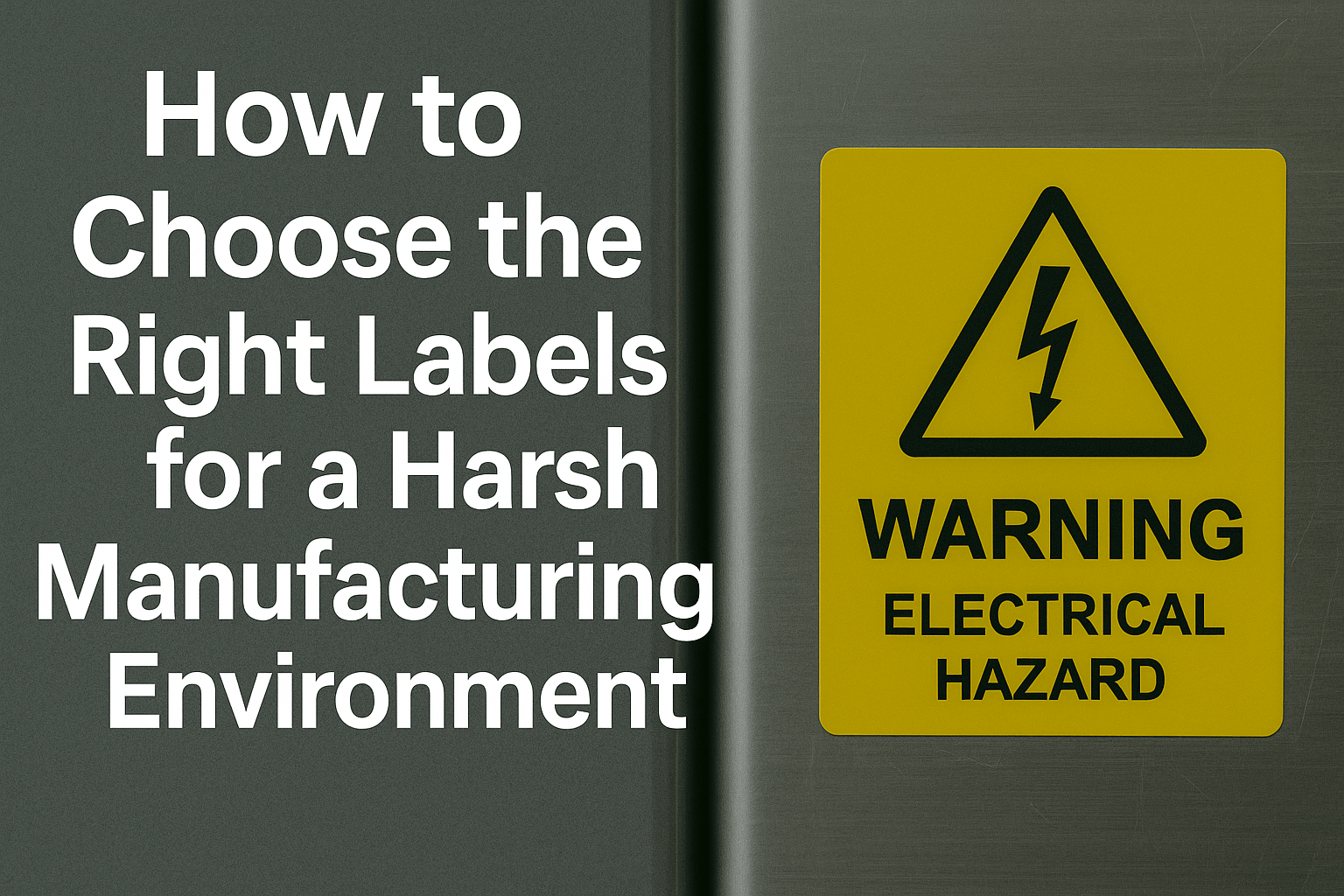
Manufacturing environments are tough. They are filled with heat, cold, moisture, chemicals, and abrasion. For a label to survive in this kind of environment, it has to be just as tough. A standard paper label will not last long in a factory or warehouse. It will quickly become illegible, peel off, or be destroyed. This can lead to a host of problems, from lost inventory to safety hazards.
This guide will walk you through the process of choosing the right labels for a harsh manufacturing environment. We will explore the different types of harsh environments, the different types of durable label materials, and the key factors you should consider when making a decision. By the end of this guide, you will have the knowledge you need to choose labels that will stand up to the toughest conditions.
Understanding the Challenges of a Harsh Environment
The first step in choosing the right labels is to understand the specific challenges of your environment. What kind of conditions will your labels be exposed to? Here are some of the most common challenges in a harsh manufacturing environment:
- Extreme Temperatures: Many manufacturing processes involve extreme heat or cold. For example, labels on products that go through an oven or a freezer need to be able to withstand those temperatures.
- Moisture and Humidity: Moisture and humidity can cause labels to peel, curl, or become illegible. This is a common problem in food and beverage processing plants, as well as in outdoor applications.
- Chemicals and Solvents: Many manufacturing processes involve the use of chemicals and solvents. These can cause labels to dissolve, smudge, or become discolored.
- Abrasion and Impact: Labels on products that are handled frequently or that are subject to rubbing or scratching need to be able to withstand abrasion and impact.
- UV Light: Labels that are exposed to direct sunlight can fade over time. This can make them difficult or impossible to read.
By understanding the specific challenges of your environment, you can start to narrow down your label options.
Choosing the Right Label Material
Once you understand the challenges of your environment, you can start to choose the right label material. There are many different types of durable label materials to choose from, each with its own unique properties. Here are some of the most common materials used for harsh environment labels:
- Polyester: Polyester is a versatile and durable material that is resistant to moisture, chemicals, and abrasion. It is a good choice for a wide range of applications, including product identification, asset tracking, and warning labels.
- Polypropylene: Polypropylene is a flexible and durable material that is resistant to moisture and chemicals. It is a good choice for applications where the label needs to conform to a curved surface.
- Vinyl: Vinyl is a durable and flexible material that is resistant to moisture, chemicals, and UV light. It is a good choice for outdoor applications and for applications where the label needs to be able to withstand a lot of handling.
- Polyimide: Polyimide is a high-performance material that is resistant to extreme temperatures, chemicals, and abrasion. It is a good choice for applications where the label will be exposed to very harsh conditions, such as in the aerospace and automotive industries.
- Metal: Metal labels, such as aluminum and stainless steel, are the most durable option. They are resistant to extreme temperatures, moisture, chemicals, abrasion, and UV light. They are a good choice for applications where the label needs to last for a very long time, such as on heavy equipment and machinery.
Choosing the Right Adhesive
In addition to choosing the right label material, you also need to choose the right adhesive. The adhesive is what holds the label to the surface. If the adhesive fails, the label will fall off. There are many different types of adhesives to choose from, each with its own unique properties. Here are some of the most common types of adhesives used for harsh environment labels:
- Acrylic: Acrylic adhesives are a good general-purpose adhesive. They are resistant to moisture, chemicals, and UV light. They are a good choice for a wide range of applications.
- Rubber-Based: Rubber-based adhesives are a good choice for applications where the label needs to stick to a rough or textured surface. They are also a good choice for applications where the label needs to be removable.
- High-Temperature: High-temperature adhesives are designed to withstand extreme heat. They are a good choice for applications where the label will be exposed to temperatures above 300°F.
- Cold-Temperature: Cold-temperature adhesives are designed to withstand extreme cold. They are a good choice for applications where the label will be exposed to temperatures below 0°F.
By choosing the right label material and the right adhesive, you can ensure that your labels will stand up to the toughest conditions.
Printing and Testing Your Labels
Once you have chosen the right label material and adhesive, you need to print your labels. The quality of your printing can have a big impact on the durability of your labels. Make sure that you are using a high-quality printer and that your labels are printed at the correct size and resolution.
It is also a good idea to test your labels before you deploy them in your facility. This will help you to ensure that they will stand up to the specific challenges of your environment. Here are a few things you can do to test your labels:
- Temperature Test: Place a labeled product in an oven or a freezer to see how the label holds up to extreme temperatures.
- Moisture Test: Submerge a labeled product in water to see how the label holds up to moisture.
- Chemical Test: Apply a small amount of a chemical or solvent to the label to see how it holds up to chemicals.
- Abrasion Test: Rub the label with a cloth or a brush to see how it holds up to abrasion.
By testing your labels, you can be confident that they will perform as expected in your facility.
Conclusion: The Right Label for the Right Job
Choosing the right labels for a harsh manufacturing environment is not always easy. There are many factors to consider, from the specific challenges of your environment to the different types of label materials and adhesives. But by taking the time to do your research and choose the right labels for the job, you can ensure that your labeling system is effective, reliable, and compliant with all relevant regulations.
A well-designed labeling system can help you to improve safety, increase efficiency, and reduce costs. It is an investment that will pay for itself many times over.
At SSCPID, we have a wide range of durable label materials and adhesives that are designed to withstand the harshest industrial environments. We can help you choose the right labels for your specific needs and create a labeling system that will stand up to the toughest conditions. Contact us today to learn more about our Harsh Environment Labeling Solutions.