Warehouse managers hear two competing pitches about RFID. One says it solves every inventory problem overnight. The other says it is too expensive to justify. Neither pitch gives you the full, honest picture. RFID measurably improves inventory accuracy in well-documented research. It also carries real cost and complexity that smaller operations should weigh carefully. This guide covers both sides, plus a practical path to evaluate whether it fits your warehouse.
What RFID Inventory Management Actually Means
RFID inventory management uses radio-wave tags instead of optical barcodes to identify and count items.
Each tag carries a microchip with a unique identifier. A reader picks up that signal using radio waves, not a line-of-sight scan. That single difference changes almost everything that happens downstream. A barcode scanner reads one label at a time, and someone has to aim it directly at each code. An RFID reader can pick up hundreds of tags per second from several feet away, even through packaging. No one has to point anything at anything. For a warehouse manager, the practical result is real. An entire pallet or shelf can register in the system almost instantly, instead of item by item.
How An RFID Inventory System Works
Every RFID inventory system has three working parts: tags, readers, and software.
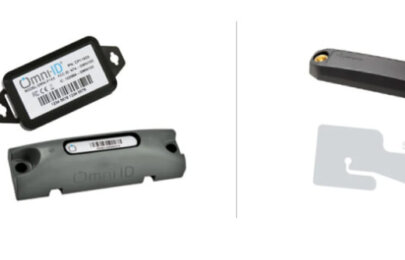
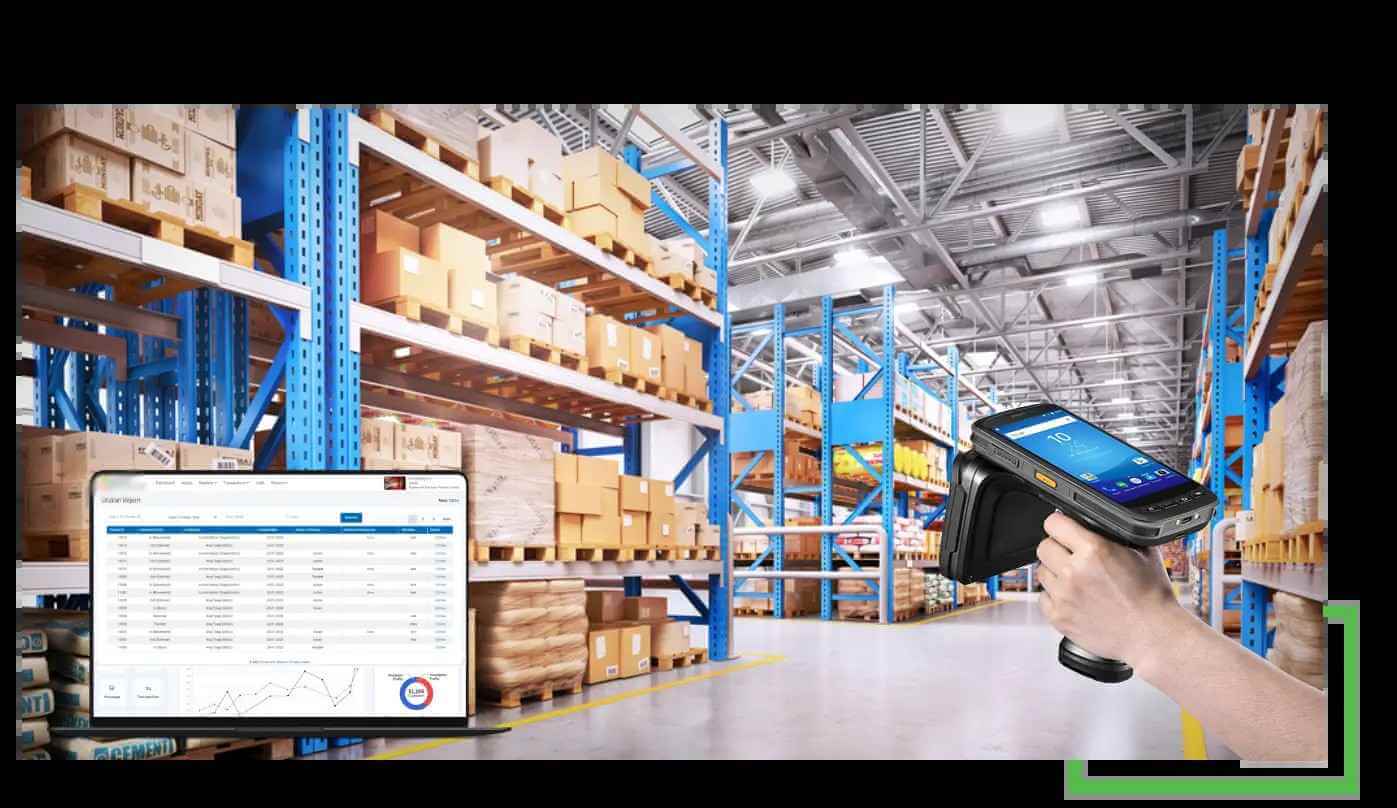
Tags attach to the item, case, or pallet and store a unique code. Readers, fixed at doorways and workstations or handheld for mobile counts, capture that code as the tag passes within range. The software platform then takes that raw data and matches it against the inventory database. It presents the result as something useful, like a current count, a location, or a movement history. Tags themselves are genuinely not a one-size-fits-all product. They operate on different frequency bands, and the right one depends on the environment. Low frequency tags work well near metal and liquids but have a short read range. High frequency tags offer moderate range and suit item-level tracking. Ultra-high frequency tags give the longest range and fastest read speed. That is why most warehouse and manufacturing applications use them. Environmental durability matters just as much as frequency. A tag for a freezer, a chemical plant, or an outdoor yard needs a different build than a retail-shelf tag.
The frequency and durability factors covered in RFID asset tracking for manufacturing apply directly to inventory tagging too.
The Real Accuracy Numbers
The accuracy case for RFID is not marketing hype. It rests on documented research from a real academic lab.
The RFID Lab at Auburn University, founded in 2005, runs the most cited independent research program in this space. A 2018 study from the lab and GS1 US tracked more than 1 million items over a full year. The sample covered five major retailers and eight brand owners. It found that 69 percent of orders contained data errors when trading partners relied on barcode-only tracking. With EPC-enabled RFID in place, that same exchange reached up to 99.9 percent order accuracy. This was not a single store or a marketing pilot. It was a year of real supply chain data, with named retail and manufacturing partners involved. For a warehouse manager, the takeaway is straightforward. RFID’s accuracy advantage over barcode and manual counting is large and real. It is independently measured, not an estimate from a sales deck.
Where RFID Actually Saves Warehouse Time
Accuracy gets the headline, but the time savings are what most warehouse managers notice first.
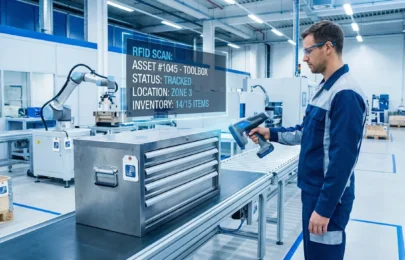
Cycle counting changes the most dramatically of all the tasks. A handheld RFID reader can pick up an entire rack of tagged items in seconds. A worker no longer has to walk the aisle scanning each barcode by hand. Receiving speeds up for much the same underlying reason. An entire incoming pallet can register against the purchase order the moment it crosses a dock door reader. It no longer needs to be unloaded and scanned item by item. Picking accuracy improves for the same underlying reason. The system verifies automatically, instead of relying on a worker to read each label correctly under time pressure. None of this eliminates warehouse labor entirely, to be clear. It shifts labor away from repetitive scanning and toward exception handling. That is generally a better use of a warehouse team’s time.
RFID Vs Barcode: When Each One Actually Makes Sense
RFID is not a universal upgrade from barcode, and pretending otherwise does warehouse managers a disservice.
Barcode systems cost less to deploy and require no line-of-sight workaround engineering. They remain perfectly adequate for lower-volume operations where counting speed is not the bottleneck. RFID earns its higher price tag in high-volume environments. Simultaneous multi-item reads and hands-free scanning translate directly into labor hours saved. A full breakdown of cost, durability, and read-range differences lives in Safe Ship’s barcode versus RFID comparison. It also covers the budget questions worth asking before deciding. The short version comes down to volume and budget. Tight budgets and lower volumes usually favor barcode. Larger budgets and high-volume, high-error-cost operations usually favor RFID.
What Implementation Actually Costs And Takes
RFID implementation costs more than a barcode rollout, and the honest range is wide because it depends entirely on scope.
Tags, readers, antennas, and software licensing all factor into the budget. So does the labor to install fixed readers at doorways or workstations. Camcode, an asset-tracking vendor, is refreshingly direct about this trade-off. In lower-volume warehouse settings, the hardware and integration cost can outweigh the accuracy benefit compared to a well-run barcode system. That is a useful counterweight to vendors who present RFID as worthwhile in every scenario. Tag selection is where a lot of project budgets quietly go sideways. The frequency band, mounting method, and environmental rating need to match real conditions, not a generic catalog spec. The Auburn lab also runs an independent tag-performance certification program called ARC. It gives buyers a neutral way to compare tag quality across vendors, instead of relying on manufacturer claims alone. Safe Ship’s RFID products team can match tag and reader options to your environment before you commit to a vendor. A realistic pilot, covering one zone or one product category, is usually the fastest way to validate real numbers. That beats committing to a facility-wide rollout on faith.
A Practical Rollout Plan For Warehouse Managers
A phased rollout beats a single big-bang switch for almost every warehouse.
Start by identifying the single biggest pain point, whether that is cycle count time, receiving errors, or shipping accuracy. Pilot RFID against that one specific problem first. Measure the baseline before you start, since you cannot prove improvement against a number you never recorded. Choose tags matched to the actual environment, not the cheapest catalog option. Confirm the read range holds up under real conditions, including racking, metal shelving, and product density. Integrate with the existing inventory or warehouse management software, rather than running RFID as a separate, disconnected system. A second system that does not talk to the first one creates more confusion than it solves. Train the team on what changes in their daily workflow, not just on the new hardware. Adoption fails more often from confused process than from faulty equipment. Expand to additional zones only after the pilot numbers hold up, and keep measuring after rollout, not just before it.
This guide focuses specifically on inventory accuracy and warehouse operations. For RFID’s role in outbound shipping, Safe Ship’s RFID shipping guide covers that side of the technology in more depth.
Talk To Someone Who Sets Up These Systems Daily
This guide covers the general case, but every warehouse has its own product mix, layout, and budget reality. Safe Ship’s RFID products team works through tag selection, pilot scope, and integration with whatever system already runs the warehouse. All of that happens before any equipment actually gets ordered. Get started with a consultation and find out whether RFID actually pencils out for your operation. A stronger barcode system may get you most of the way there for less.