In the fast-paced world of manufacturing, efficiency is paramount. Every minute spent searching for misplaced tools or equipment is a minute of lost productivity, delayed production schedules, and increased operational costs. Radio Frequency Identification (RFID) asset tracking has emerged as a powerful solution to streamline asset management, improve inventory accuracy, and deliver measurable returns on investment. This comprehensive guide explores the benefits of RFID technology for tracking equipment and tools in manufacturing environments, compares it to traditional barcode systems, and provides practical insights into implementing a successful RFID asset tracking system.
The Growing Challenge of Asset Tracking in Manufacturing
Manufacturing facilities are complex environments characterized by constant movement of materials, tools, and equipment across multiple work areas, production lines, and storage locations. Keeping track of these assets presents significant challenges that directly impact operational efficiency and profitability.
Lost or Misplaced Assets: Tools and equipment can easily be misplaced in busy manufacturing environments, leading to costly replacements, production delays, and frustrated workers. Studies indicate that manufacturing workers can spend up to 20% of their time searching for tools and materials—time that could be spent on productive activities.
Inefficient Workflows: Without real-time visibility into asset locations, workers must manually search for items, interrupt colleagues, or wait for equipment to become available. These inefficiencies compound throughout the day, significantly impacting overall productivity.
Inaccurate Inventory Data: Manual inventory tracking methods are inherently prone to human error, leading to discrepancies between recorded inventory levels and actual stock. These inaccuracies can result in over-ordering, stockouts, and poor resource allocation decisions.
Production Bottlenecks: When critical tools or equipment cannot be located quickly, production lines may come to a halt. Even brief delays can cascade through the production schedule, affecting delivery commitments and customer satisfaction.
Maintenance Compliance Issues: Without accurate tracking of equipment usage and maintenance history, facilities may miss scheduled maintenance intervals, leading to equipment failures, safety hazards, and costly unplanned downtime.
Understanding How RFID Asset Tracking Works
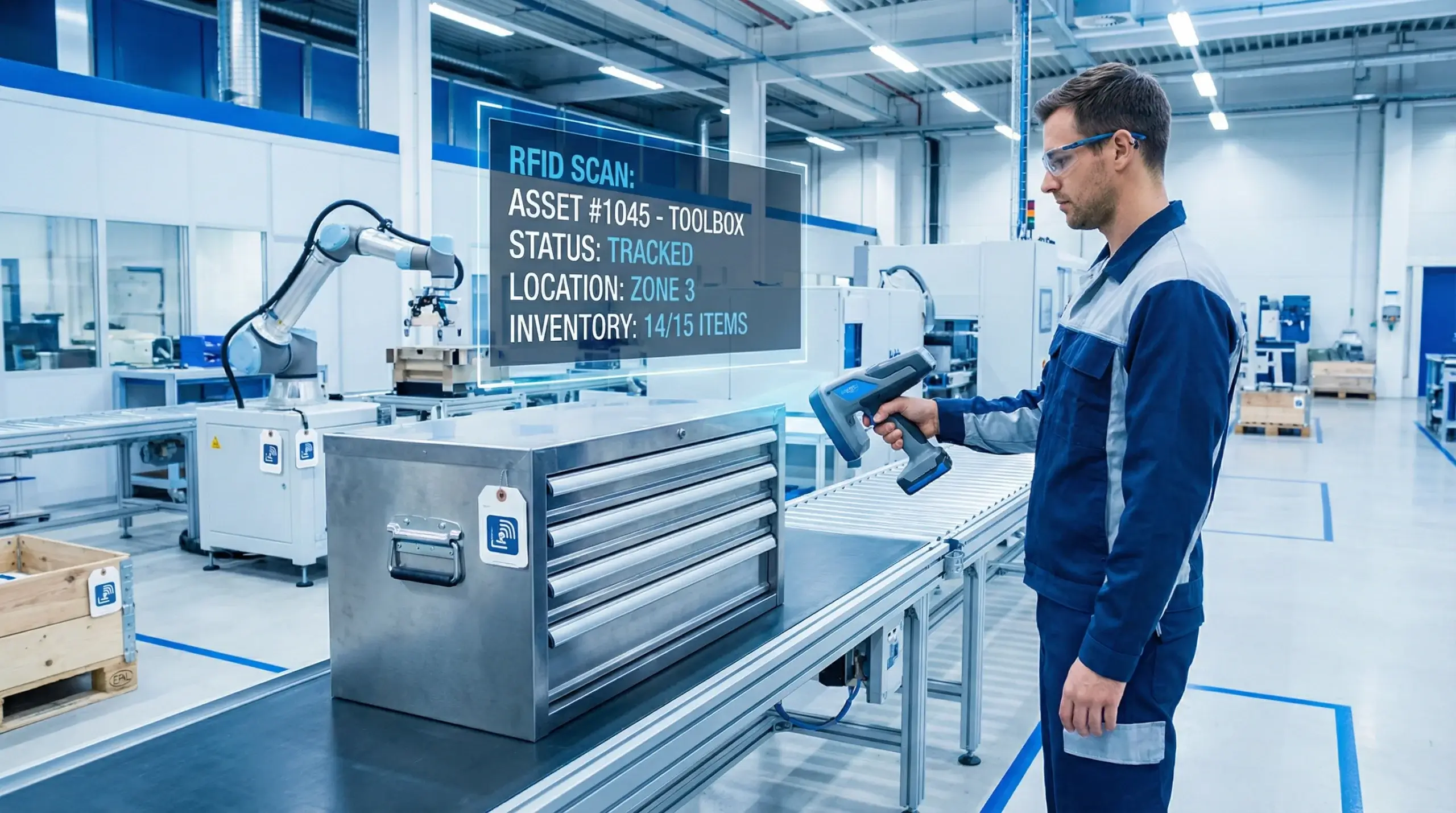
RFID technology uses radio waves to automatically identify and track tags attached to objects. Unlike traditional identification methods that require manual scanning or visual inspection, RFID enables automatic, hands-free identification of assets as they move through your facility. An RFID system consists of three main components working together:
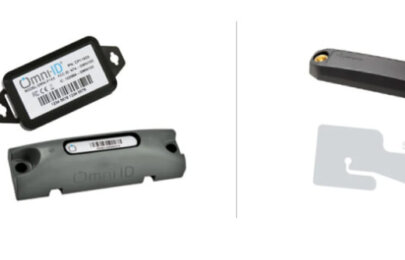
RFID Tags: These small devices contain a microchip that stores information about the asset (such as a unique identifier, asset type, or maintenance history) and an antenna to transmit and receive radio signals. Tags come in various forms, including labels, hard tags, and embedded chips, to accommodate different asset types and environmental conditions.
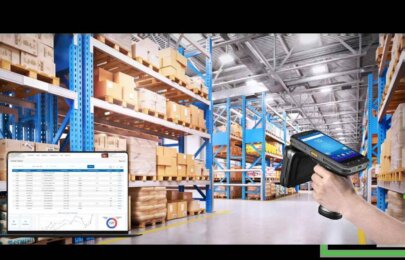
RFID Readers: These devices emit radio waves and receive signals from RFID tags within their read range. Readers can be fixed (mounted at doorways, workstations, or storage areas) or handheld (for mobile inventory counts and asset searches). Modern readers can scan hundreds of tags per second, enabling rapid inventory counts and real-time tracking.
Software Platform: The software processes data from the readers, maintains the asset database, and provides the user interface for tracking, reporting, and analysis. Advanced platforms integrate with enterprise resource planning (ERP) systems, warehouse management systems (WMS), and maintenance management software to provide comprehensive visibility across operations.
Unlike barcode systems, which require a direct line of sight to scan a label, RFID readers can scan multiple tags simultaneously from a distance, even if the tags are not directly visible. This fundamental difference makes RFID a significantly more efficient and versatile solution for asset tracking in dynamic manufacturing environments.
Benefits of RFID vs. Barcode for Tool Tracking
While barcodes have been the standard for asset tracking for decades, RFID offers several significant advantages, particularly for tracking tools and equipment in manufacturing settings. Understanding these differences is essential for making informed technology decisions.
| Feature | RFID Technology | Barcode Technology |
|---|---|---|
| Read Speed | High (hundreds of tags per second) | Low (one tag at a time) |
| Line of Sight | Not required | Required |
| Read Range | Long (up to 100+ feet with active tags) | Short (typically inches to a few feet) |
| Simultaneous Reads | Yes (multiple tags at once) | No (sequential scanning only) |
| Durability | High (can withstand harsh environments) | Low (easily damaged by dirt, moisture) |
| Data Storage | High (can store extensive information) | Low (limited to encoded number) |
| Read/Write Capability | Yes (data can be updated on tag) | No (static information only) |
| Cost per Tag | Higher initial cost | Lower initial cost |
According to Brady Corporation, the choice between RFID and barcode depends on specific application requirements. RFID excels in environments where speed, automation, and harsh conditions are factors, while barcodes remain cost-effective for simpler applications with lower volume requirements.
The ROI of Implementing RFID Asset Tracking
The initial investment in an RFID asset tracking system can be a concern for manufacturers evaluating the technology. However, the return on investment (ROI) can be substantial, with benefits that extend far beyond simply knowing where assets are located. According to RFID4U, organizations implementing RFID asset tracking typically see returns in multiple areas:
Reduced Asset Loss and Theft: By providing real-time visibility into asset location and movement, RFID can significantly reduce the incidence of lost, stolen, or misappropriated tools and equipment. Many facilities report 20-30% reductions in asset shrinkage after implementing RFID tracking.
Improved Asset Utilization: Knowing where your assets are at all times allows you to optimize their use across the facility. This visibility often reveals that facilities have more assets than needed in some areas while experiencing shortages in others, enabling better redistribution and avoiding unnecessary purchases.
Increased Productivity: Less time spent searching for assets means more time for productive work. Studies suggest that RFID can reduce search time by 70-90%, translating directly to increased output and reduced labor costs.
Enhanced Maintenance Management: RFID can track asset usage patterns and automatically trigger maintenance alerts based on actual use rather than arbitrary schedules. This approach extends equipment life, reduces unexpected failures, and optimizes maintenance resource allocation.
Improved Compliance and Audit Readiness: For facilities subject to regulatory requirements or customer audits, RFID provides detailed, automated records of asset location, movement, and maintenance history. This documentation simplifies compliance verification and audit preparation.
Better Capital Planning: Accurate data on asset utilization and lifecycle helps inform capital expenditure decisions, ensuring that replacement and expansion investments are based on actual needs rather than estimates.
Choosing the Right RFID Tags for Your Equipment
The success of your RFID asset tracking system depends significantly on choosing the right tags for your specific needs. There are many different types of RFID tags available, each with unique characteristics suited to different applications. Key factors to consider when selecting RFID tags include:
Passive vs. Active Tags: Passive tags have no internal power source and are powered by the reader’s signal. They are smaller, less expensive, and have virtually unlimited lifespan but offer shorter read ranges (typically up to 30 feet). Active tags contain their own battery, enabling longer read ranges (100+ feet) and additional features like sensors, but are larger, more expensive, and require battery replacement.
Frequency Selection: RFID systems operate at different frequencies, each with distinct characteristics. Low Frequency (LF) tags work well near metal and liquids but have short read ranges. High Frequency (HF) tags offer moderate range and are commonly used for item-level tracking. Ultra-High Frequency (UHF) tags provide the longest read ranges and fastest read speeds, making them ideal for most manufacturing applications.
Environmental Durability: Tags must withstand the conditions they will encounter, including temperature extremes, moisture, chemicals, physical impact, and UV exposure. Specialized tags are available for high-temperature applications, outdoor use, and harsh industrial environments.
Mounting Method: Consider how tags will be attached to assets. Options include adhesive labels, cable ties, rivets, screws, and embedded tags. The mounting method must be secure enough to prevent tag loss while being practical for your asset types.
Memory and Data Requirements: Determine what information needs to be stored on the tag versus in the central database. Tags with larger memory can store more information locally, enabling offline operations and reducing database queries.
Implementation Best Practices
Successfully implementing an RFID asset tracking system requires careful planning and execution. Consider the following best practices:
Start with a Pilot Program: Begin with a limited deployment in one area or for one asset category. This allows you to refine processes, train staff, and demonstrate value before expanding to the full facility.
Conduct a Site Survey: Work with your RFID provider to assess your facility’s RF environment, identify potential interference sources, and optimize reader placement for reliable coverage.
Establish Clear Processes: Define how assets will be tagged, how data will be maintained, and how the system will be used in daily operations. Clear processes ensure consistent adoption and accurate data.
Integrate with Existing Systems: Connect your RFID system with ERP, WMS, and maintenance management systems to maximize value and avoid duplicate data entry.
Train Your Team: Ensure all users understand how to use the system effectively and why accurate data matters. Ongoing training and support are essential for sustained success.
Conclusion
RFID asset tracking offers a powerful solution for manufacturers looking to improve efficiency, reduce costs, and gain competitive advantage. By providing real-time visibility into asset location and movement, RFID helps optimize workflows, reduce asset loss, improve maintenance management, and deliver measurable returns on investment.
At Safe Ship Commercial Products, we specialize in helping manufacturers implement effective RFID solutions tailored to their specific needs. Our team of RFID-certified experts can assess your requirements, recommend appropriate technology, and support your implementation from planning through deployment and beyond.
To learn more about how our RFID solutions can benefit your manufacturing operations, please visit our RFID Products service page or contact our team for a consultation.