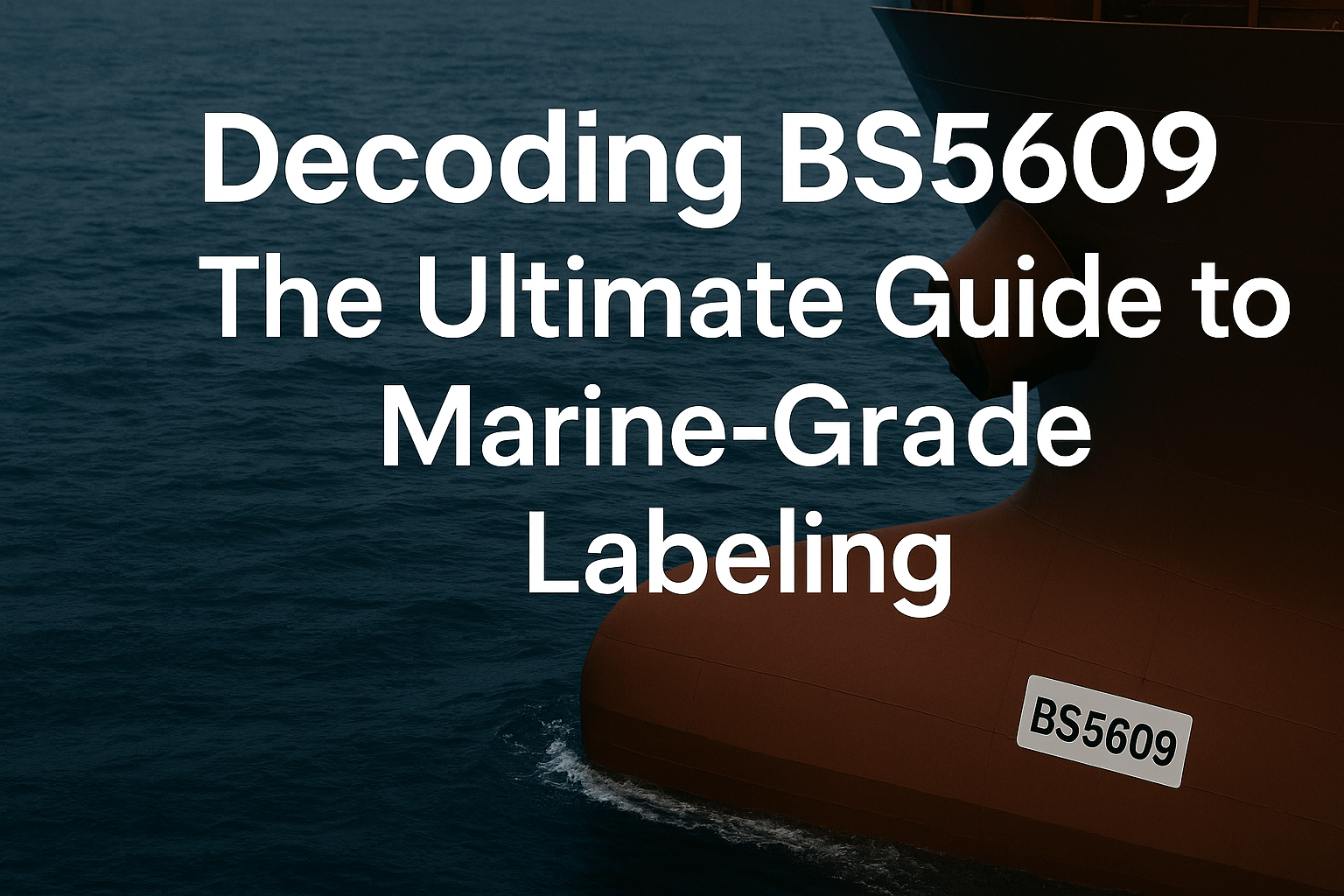
When it comes to shipping chemicals and other hazardous materials by sea, there is no room for error. A label that peels off, fades, or becomes illegible can have disastrous consequences. That is why the British Standard BS5609 was created. BS5609 is a globally recognized standard for pressure-sensitive adhesive labels that are used for marine applications. It is the gold standard for durability and is a requirement for any company that ships dangerous goods by sea.
This guide will provide a comprehensive overview of BS5609. We will explore what it is, why it is important, and what you need to do to ensure that your labels are compliant. By the end of this guide, you will have a clear understanding of this critical standard and be able to make informed decisions about your marine-grade labeling.
What is BS5609?
BS5609 is a British Standard that specifies the requirements for pressure-sensitive adhesive labels that are used for marine applications. It is a four-part standard, but the two most important parts for the labeling industry are Section 2 and Section 3.
- Section 2 of the standard tests the label’s material and adhesive. It is designed to ensure that the label will remain adhered to the container for at least three months in seawater.
- Section 3 of the standard tests the print on the label. It is designed to ensure that the print will remain legible and resistant to abrasion, weathering, and chemical exposure.
For a label to be fully BS5609 compliant, both the label material and the print must be tested and certified. This means that you cannot simply use a BS5609-compliant label material with any printer and ink. The entire system – the label material, the printer, and the ink – must be tested and certified together.
Why is BS5609 So Important?
BS5609 is important for a number of reasons:
- Safety: The primary purpose of BS5609 is to ensure that labels on chemical drums and other containers of dangerous goods will remain legible and attached, even after being submerged in seawater for an extended period of time. This is critical for the safety of the crew, the public, and the environment.
- Compliance: The International Maritime Dangerous Goods (IMDG) Code requires that all dangerous goods shipped by sea be labeled in accordance with BS5609. Failure to comply with this regulation can result in fines, penalties, and even the seizure of your shipment.
- Durability: BS5609 is one of the most rigorous testing standards in the world. A label that is BS5609 compliant is a label that is built to last. It will be resistant to abrasion, weathering, chemical exposure, and UV light. This makes it ideal for a wide range of harsh environment applications, not just marine applications.
- Peace of Mind: When you use a BS5609-compliant label, you can have peace of mind knowing that your labels will remain legible and attached, no matter what the conditions. This can help you to avoid costly rework, delays, and compliance issues.
The BS5609 Testing Process
The BS5609 testing process is a rigorous and demanding process. It is designed to simulate the harsh conditions that a label will be exposed to in a marine environment. Here is a brief overview of the testing process for Section 2 and Section 3.
Section 2: Label Material and Adhesive
To be certified under Section 2, the label material and adhesive must undergo a series of tests, including:
- Marine Immersion: The label is applied to a substrate and then submerged in seawater for three months. After three months, the label must show no signs of peeling, curling, or discoloration.
- Adhesion Test: The label is tested for its adhesion strength. It must meet a minimum adhesion strength requirement.
- Weathering Test: The label is exposed to artificial weathering, including salt spray and sunlight. It must show no signs of fading or discoloration.
Section 3: Print
To be certified under Section 3, the print on the label must undergo a series of tests, including:
- Abrasion Resistance: The print is tested for its resistance to abrasion. It must remain legible after being subjected to a specified number of rubs.
- Permanence of Print: The print is tested for its permanence. It must remain legible after being exposed to artificial weathering, including salt spray and sunlight.
- Chemical Resistance: The print is tested for its resistance to a variety of chemicals, including oil, gasoline, and acids.
Only a label that has passed all of these tests can be certified as BS5609 compliant.
How to Achieve BS5609 Compliance
Achieving BS5609 compliance can be a complex process, but it is essential for any company that ships dangerous goods by sea. Here are the key steps you need to take to ensure that your labels are compliant:
- Choose a BS5609-Compliant Label Material: The first step is to choose a label material that has been certified under Section 2 of the standard. There are many different types of BS5609-compliant label materials to choose from, including polyester, vinyl, and polyimide.
- Choose a BS5609-Compliant Printer and Ink: The next step is to choose a printer and ink that have been certified under Section 3 of the standard. It is important to note that the printer, ink, and label material must be tested and certified together as a system. You cannot simply use a BS5609-compliant label material with any printer and ink.
- Work with a Knowledgeable Supplier: The best way to ensure that your labels are BS5609 compliant is to work with a knowledgeable label supplier. A good supplier will be able to help you choose the right label material, printer, and ink for your specific needs. They will also be able to provide you with the necessary documentation to prove that your labels are compliant.
By following these steps, you can ensure that your labels are compliant with BS5609 and that you are prepared for the rigors of marine shipping.
Conclusion: The Gold Standard for Durability
BS5609 is more than just a standard; it is a guarantee of durability. A label that is BS5609 compliant is a label that you can trust to remain legible and attached, no matter what the conditions. Whether you are shipping dangerous goods by sea or you simply need a label that will stand up to the harshest industrial environments, BS5609 is the gold standard.
At SSCPID, we offer a wide range of BS5609-compliant labeling solutions. We can help you choose the right label material, printer, and ink for your specific needs and provide you with the documentation you need to prove that your labels are compliant. Contact us today to learn more about our BS5609-compliant labeling solutions.