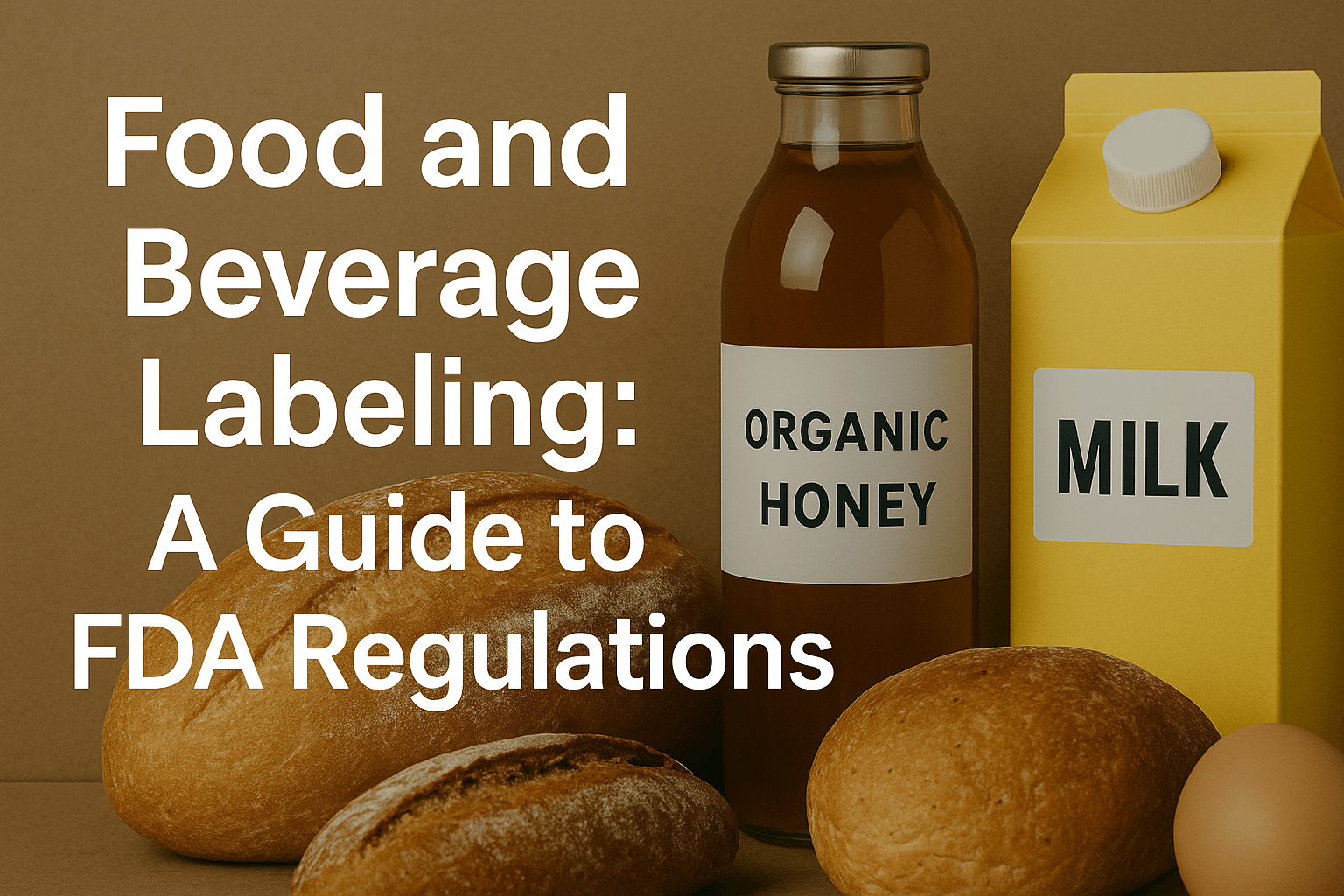
In the food and beverage industry, the label is more than just a pretty package. It is a legal document that provides consumers with important information about the product they are buying. From the ingredients to the nutritional content, the label is a critical tool for helping consumers make informed decisions about the food they eat.
This guide will provide a comprehensive overview of the food and beverage labeling requirements. We will explore the key regulations from the FDA, the essential components of a food label, and the best practices for ensuring compliance. By the end of this guide, you will have a clear understanding of the critical role that labeling plays in the food and beverage industry and what you need to do to ensure that your products are safe and compliant.
The Importance of Food and Beverage Labeling
Food and beverage labeling is important for a number of reasons:
- Consumer Safety: The primary purpose of food and beverage labeling is to protect consumer safety. A clear and accurate label provides consumers with the information they need to avoid allergens and other harmful ingredients.
- Informed Decisions: Food and beverage labels provide consumers with the information they need to make informed decisions about the food they eat. This includes information about the ingredients, the nutritional content, and the origin of the product.
- Compliance: The FDA has established strict regulations for food and beverage labeling. Failure to comply with these regulations can result in fines, penalties, and even the seizure of your products.
- Brand Trust: A well-designed label can help to build trust with your customers. It can also help to differentiate your product from the competition.
FDA Labeling Requirements: A Recipe for Compliance
The FDA has a comprehensive set of regulations that govern the labeling of food and beverage products. These regulations are designed to ensure that all products are labeled in a way that is clear, concise, and accurate. Here are some of the key FDA labeling requirements:
- 21 CFR Part 101: This is the primary regulation that governs the labeling of food and beverage products. It covers everything from the content of the label to the format of the label.
- Food Labeling Guide: The FDA has published a Food Labeling Guide that provides a detailed overview of the labeling requirements. This guide is an essential resource for any company that produces food or beverage products.
- Nutrition Facts Label: The Nutrition Facts label is a standardized label that is required on most food and beverage products. It provides information about the nutritional content of the product, including the serving size, the number of calories, and the amount of fat, sodium, and sugar.
- Allergen Labeling: The Food Allergen Labeling and Consumer Protection Act of 2004 (FALCPA) requires that all food labels clearly identify the eight major food allergens: milk, eggs, fish, crustacean shellfish, tree nuts, peanuts, wheat, and soybeans.
By complying with these regulations, you can ensure that your labels are clear, concise, and accurate.
Essential Components of a Food and Beverage Label
A food and beverage label must contain a wealth of information in a small amount of space. Here are some of the essential components of a food and beverage label:
- Statement of Identity: The statement of identity is the common or usual name of the food.
- Net Quantity of Contents: The net quantity of contents is the amount of food in the package. It must be expressed in both weight and metric units.
- Ingredient List: The ingredient list must list all of the ingredients in the food in descending order by weight.
- Name and Address of the Manufacturer: The name and address of the manufacturer, packer, or distributor must be on the label.
- Nutrition Facts Label: The Nutrition Facts label must be on all food and beverage products, unless the product qualifies for an exemption.
- Allergen Declaration: The label must declare the presence of any of the eight major food allergens.
By including these essential components, you can ensure that your labels provide consumers with the information they need to make informed decisions about the food they eat.
Conclusion: Building Trust Through Transparency
Food and beverage labeling is more than just a legal requirement; it is a commitment to transparency. By providing consumers with clear and accurate information about your products, you can build trust and loyalty. You can also help consumers to make informed decisions about the food they eat.
At SSCPID, we understand the importance of food and beverage labeling. We offer a wide range of labeling solutions that are designed to help you meet your regulatory requirements. From durable, high-quality labels to on-demand printing solutions, we have the expertise to help you create a labeling system that is safe, compliant, and effective. Contact us today to learn more about our Food and Beverage Labeling Solutions.