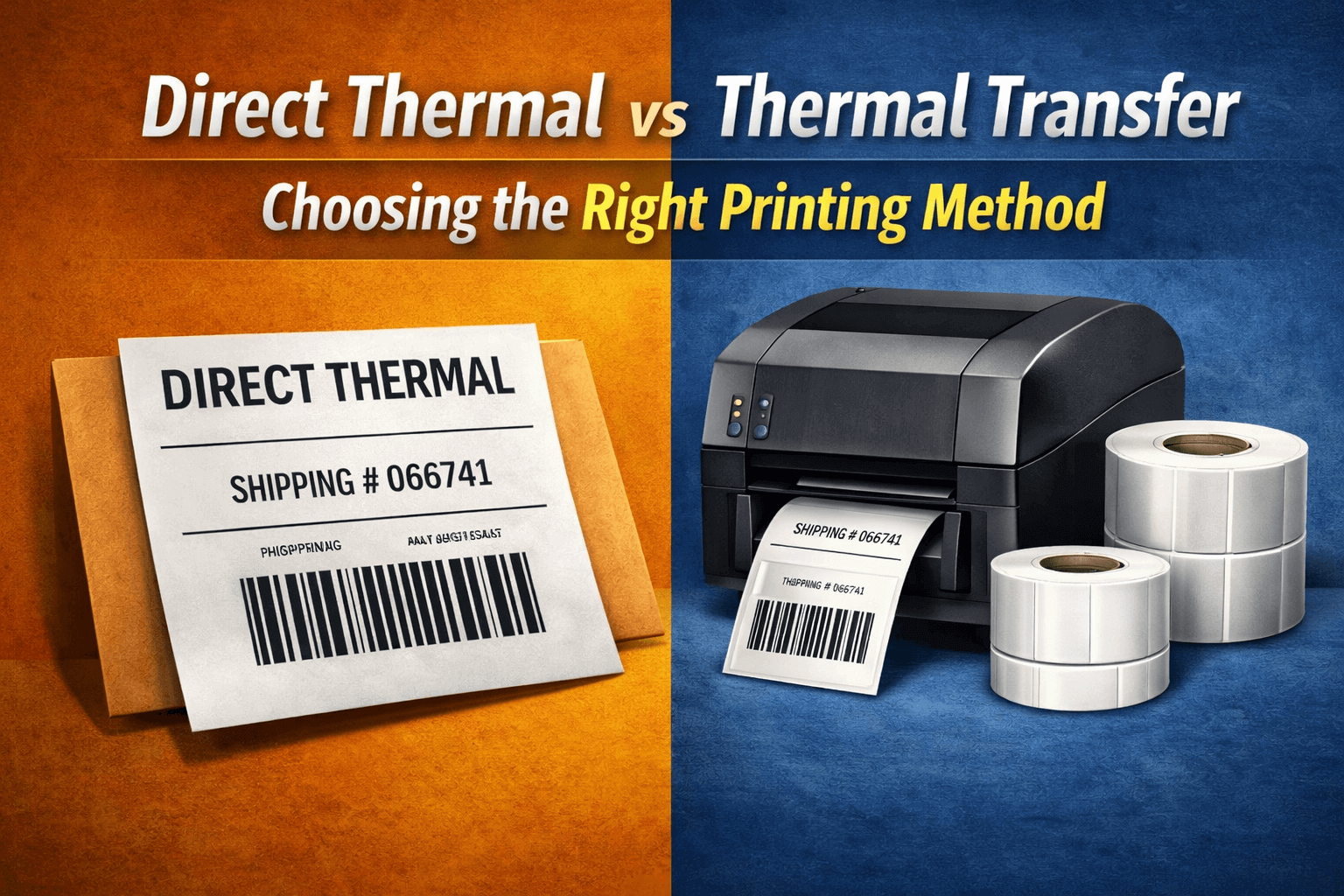
Picking the wrong label printing method costs you money in reprints, unreadable barcodes, and wasted supplies. Direct thermal and thermal transfer are the two main technologies behind barcode and industrial label printing. They look similar on the surface, but they work in very different ways.
This guide breaks down how each method works, when to use it, and how to match the right labels and ribbons to your application. If you are evaluating printing options for shipping, inventory, asset tracking, or barcode labeling solutions, this comparison will help you make a confident decision.
How Direct Thermal Printing Works
Direct thermal printing uses heat-sensitive label material. The printer’s thermal printhead applies heat directly to the label surface. The chemically treated coating on the label reacts to the heat and turns black, creating text, barcodes, and graphics.
There is no ink, toner, or ribbon involved. The image forms through a chemical reaction in the label material itself. This makes the process simple and keeps the number of supplies low.
However, direct thermal labels remain chemically active after printing. That means the label can darken or fade when exposed to heat, direct sunlight, or friction over time. Most direct thermal labels stay readable for about six months under normal conditions. After that, the print quality starts to degrade.
When to Use Direct Thermal Labels
Direct thermal printing works best for short-term applications where the label does not need to last more than a few months. Common uses include:
- Shipping and logistics labels
- Warehouse pick tickets
- Grocery and deli labels for perishable goods
- Receipts and ticket printing
- Visitor badges and temporary ID labels
If your label lives indoors, stays out of direct sunlight, and serves its purpose within six months, direct thermal is a solid, low-cost choice.
Advantages of Direct Thermal
- Lower equipment cost. Direct thermal printers tend to cost less upfront because the mechanism is simpler.
- No ribbon required. You only need to buy the thermal label paper, which cuts ongoing supply costs.
- Easy operation. Fewer components mean fewer things that can go wrong. Loading labels is straightforward.
- Compact size. Most mobile and portable label printers use direct thermal technology because of its smaller footprint.
Limitations of Direct Thermal
- Short label life. Images fade within months, especially in warm or bright environments.
- Sensitive to environment. Heat, UV light, moisture, and chemical contact can darken or destroy the print.
- Black-only printing. Direct thermal can only produce black images on the treated substrate.
- Higher printhead wear. The printhead contacts the chemically treated label directly, which wears it out faster. According to SATO’s thermal printing comparison, direct thermal printheads typically last only 25% to 50% as long as thermal transfer printheads.
How Thermal Transfer Printing Works
Thermal transfer printing uses a ribbon coated with wax, resin, or a blend of both. The ribbon sits between the printhead and the label material. When the printhead heats up, it melts the ink off the ribbon and bonds it onto the label surface.
The result is a crisp, durable image that becomes part of the label. Because the ink physically transfers onto the media, it does not rely on a chemical reaction. This means the printed image resists heat, moisture, scratching, and UV exposure far better than a direct thermal print.
According to Zebra Technologies, thermal transfer labels produce the most durable printed output available when matched with the right media and ribbon combination.
When to Use Thermal Transfer Labels
Thermal transfer is the right choice for any application where the label must last longer than six months or face harsh conditions. Common uses include:
- Product identification and branding labels
- Asset tags and equipment labels
- Harsh environment barcode labels for outdoor or industrial use
- Chemical drum and container labels
- Pharmaceutical and medical labels
- Compliance and safety labels
If durability, chemical resistance, or long-term readability matter to your operation, thermal transfer is the clear winner.
Advantages of Thermal Transfer
- Long label life. Thermal transfer labels can last two years or more, depending on the ribbon and substrate.
- Broad material compatibility. You can print on paper, polyester, polypropylene, vinyl, and other synthetics.
- Resistant to harsh conditions. The printed image withstands heat, cold, chemicals, moisture, UV light, and abrasion.
- Color options. Colored ribbons let you print in colors beyond black for coding or branding.
- Longer printhead life. The ribbon acts as a buffer between the printhead and the label, reducing wear.
Limitations of Thermal Transfer
- Ribbon cost. You must purchase ribbons in addition to label stock, which raises ongoing supply expenses.
- More complex setup. Loading and aligning ribbons adds a step to the printing process.
- Ribbon waste. Single-pass ribbons create waste, especially on short print runs.
- Ribbon matching. The ribbon type must match the label material. A mismatch causes poor print quality or printhead damage.
Thermal Transfer Ribbon Types Explained
Choosing the right ribbon is just as important as choosing the right label material. There are three main ribbon types, and each one serves a different level of durability.
Wax Ribbons
Wax ribbons are the most affordable option. They melt at a lower temperature and print quickly on paper-based label stock. The trade-off is reduced durability. Wax prints can smudge or scratch with heavy handling. Use wax ribbons for general indoor labels like shipping labels, shelf tags, and warehouse bin labels.
Wax-Resin Ribbons
Wax-resin ribbons blend wax and resin in the ink formula. This combination creates a sharper, more durable image that resists moderate handling, moisture, and temperature changes. Wax-resin ribbons work on both coated paper and some synthetic materials. They fit applications like barcode labels, retail tags, and pharmaceutical labels where moderate durability matters.
Resin Ribbons
Resin ribbons provide the highest durability. They melt at a higher temperature and bond deeply into synthetic substrates like polyester and polypropylene. Resin-printed labels resist chemicals, solvents, abrasion, extreme heat, and outdoor exposure. Use resin ribbons for chemical container labels, automotive parts, outdoor asset tags, and any label that must survive harsh manufacturing environments.
How to Choose Between Direct Thermal and Thermal Transfer
The decision comes down to four factors: label lifespan, environment, budget, and print volume. Here is a quick way to evaluate your needs.
Choose direct thermal when:
- Labels need to last less than six months
- Labels stay indoors in controlled conditions
- You want lower upfront costs and simpler operation
- Your application is shipping, receipts, or temporary ID
Choose thermal transfer when:
- Labels need to last more than six months
- Labels face heat, cold, sunlight, chemicals, or heavy handling
- You need to print on synthetic materials
- Barcode scannability over time is critical to your operation
Many businesses use both methods. A warehouse might use direct thermal for daily pick tickets and thermal transfer for permanent barcode labels and asset tracking. Using each method where it fits saves money and delivers better results.
Matching Labels to Printing Methods
The label material must match the printing method. Direct thermal requires chemically treated thermal label paper. You cannot run standard paper through a direct thermal printer and expect results.
Thermal transfer labels come in a wider range of materials. Paper stock works for indoor use with wax ribbons. Synthetic stocks like polyester and polypropylene pair with resin ribbons for demanding environments. Getting this pairing right is critical. An incompatible ribbon and label combination leads to smeared prints, poor adhesion, and wasted supplies.
If you are unsure which combination fits your application, start by defining the environment. Consider temperature range, chemical exposure, UV contact, and how much handling the label will face. From there, match the substrate and ribbon to those conditions. For guidance on selecting materials that hold up, read our guide on choosing the right industrial label material.
Get the Right Labels and Printing Setup from SSCPID
Safe Ship Commercial Products Group provides industrial label solutions and thermal transfer ribbons built for real-world conditions. With over 40 years of experience serving the metals, chemicals, and construction industries, we help you select the right label stock, ribbon type, and printer configuration for your exact application.
Whether you need direct thermal labels for shipping or resin-printed thermal transfer labels for chemical drums, our team has the expertise to get it right. Contact us today to discuss your labeling needs and get a free quote.

Latest Posts

1D vs 2D Barcodes: Which Format Does Your Operation Actually Need?
February 26, 2026

