Standard adhesive labels fail in harsh environments. Heat warps them. Chemicals dissolve them. Abrasion wipes them clean. When your equipment operates outdoors, on a factory floor, or near corrosive materials, you need identification that lasts as long as the asset itself. That is where metal asset tags and equipment nameplates come in.
This guide covers the materials, marking methods, and attachment options that make metal tags the go-to choice for long-term equipment identification. If your operation needs readable labels in tough conditions, this breakdown will help you choose the right solution.
What Are Metal Asset Tags?
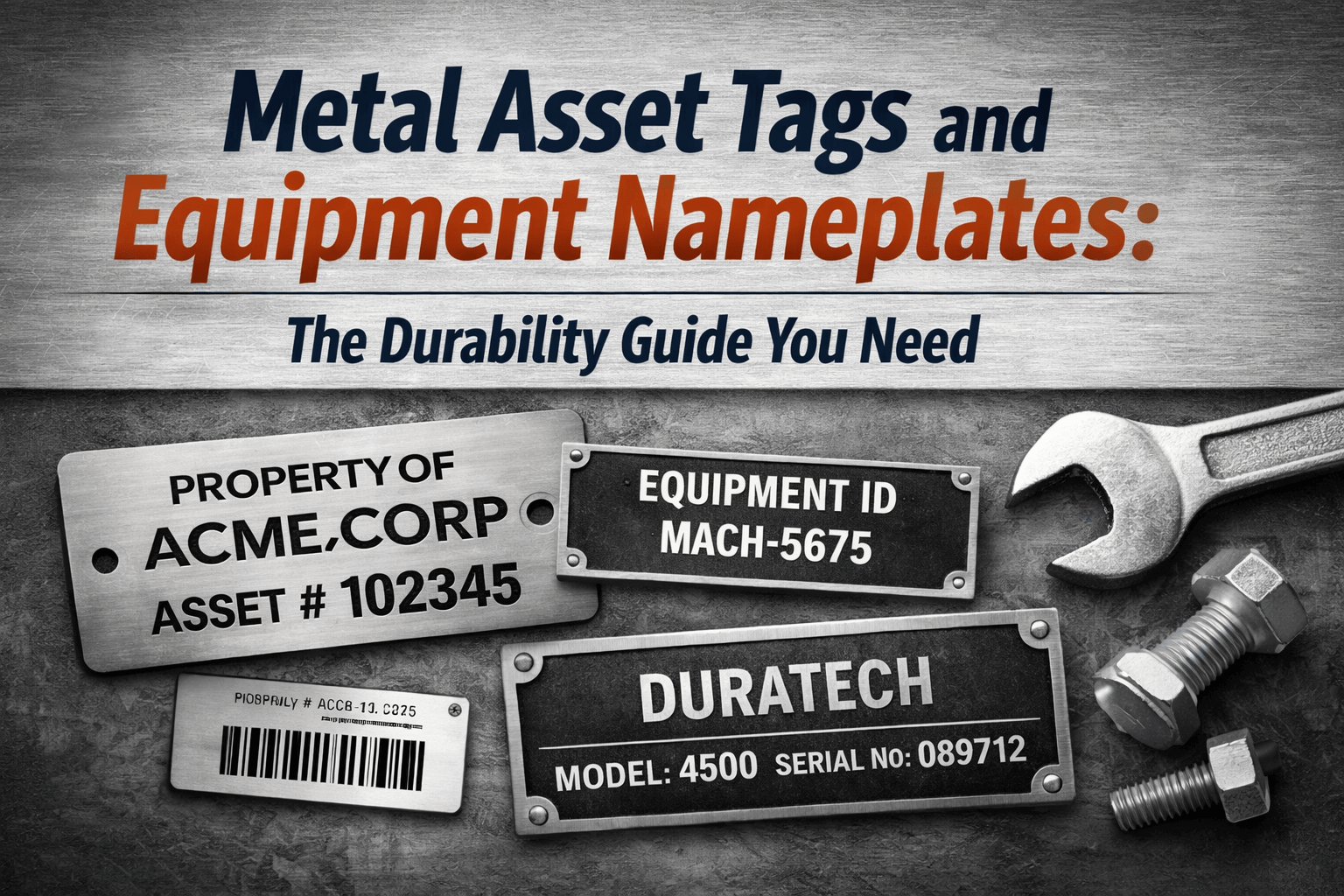
Metal asset tags are identification plates made from aluminum, stainless steel, brass, or other metals. They display serial numbers, barcodes, QR codes, company logos, and safety information. Unlike paper or synthetic labels, metal tags resist the conditions that destroy standard labeling materials.
Industries that rely on metal tags include oil and gas, construction, manufacturing, utilities, aerospace, and heavy equipment operations. Facilities use them to track fixed assets, mark equipment with maintenance data, display compliance information, and identify tools across job sites.
Metal equipment nameplates carry manufacturer details, model numbers, voltage ratings, and operating instructions. OSHA requires clear identification on machinery to protect workers. A metal nameplate that stays legible for decades keeps your facility compliant and reduces accidents caused by unreadable labels.
Types of Metal for Asset Tags and Nameplates
The right metal depends on your environment, budget, and durability requirements. Here are the three most common choices.
Aluminum Asset Tags
Aluminum is lightweight, resistant to rust, and easy to customize. It costs less than stainless steel, making it a practical choice for large-scale tagging projects. Anodized aluminum adds a layer of protection through an electrochemical process that hardens the surface and allows color to be embedded into the metal itself.
Photo anodized aluminum tags can last more than 20 years outdoors because the image sits beneath the protective anodized layer. This makes aluminum a strong fit for outdoor equipment, utility poles, fleet vehicles, and construction assets.
Aluminum works well for most industrial environments. It may not hold up in extremely corrosive conditions or in contact with certain chemicals that attack aluminum alloys.
Stainless Steel Tags
Stainless steel is the most durable option available. It resists corrosion, chemicals, extreme temperatures, moisture, and physical impact better than any other common tag material.
Choose stainless steel when the asset operates in chemical plants, marine environments, refineries, or any setting where corrosion is a constant threat. Stainless steel also comes in magnetic and non-magnetic options, which matters for facilities with magnetic detection equipment.
The trade-off is cost. Stainless steel tags are more expensive than aluminum. But for critical assets in severe environments, the extra investment pays for itself in longevity.
Brass Tags
Brass offers a polished, professional appearance along with strong corrosion resistance. The high copper content naturally resists oxidation, making it a solid choice for valve tags, electrical panel markers, and commercial building equipment.
Brass holds up well in indoor and moderate outdoor conditions. It does not match stainless steel in highly corrosive or extreme-temperature environments. Facilities choose brass when appearance matters alongside function, such as in hospitality, commercial HVAC, or public infrastructure.
Metal Tag Marking Methods
The marking method determines how long the information stays readable. Some methods embed data permanently into the metal. Others apply surface-level marks that can wear over time. Here is how the main methods compare.
Embossing
Embossing uses a die set to press characters upward into the metal, creating raised text. This is one of the most durable marking methods available. Raised characters stay readable even when the tag gets dirty, painted over, or exposed to heavy abrasion. Embossing works best for high-volume runs of a single design because each unique layout requires a custom die.
Stamping
Stamping presses characters downward into the metal, creating indented text. Like embossing, stamped marks carry no surface ink, so nothing wears off or fades. Stamped tags are a trusted choice for serialized identification in oil and gas, utilities, and heavy construction. The limitation is that indented text can collect dirt, which may reduce legibility in some conditions.
Laser Engraving
Laser engraving uses a high-powered laser to carve information into the metal surface. The depth of the cut makes the mark highly durable and resistant to wear. Each tag can carry a unique design, making laser engraving ideal for serialized asset tags, barcodes, and QR codes. The process is slower than die-based methods and costs more at high volumes. But for variable data, it offers unmatched flexibility.
Chemical Etching
Chemical etching removes thin layers of metal to create a mark. The result is a clean, detailed image that works well for logos, fine text, and complex graphics. Etched marks last around 5 to 10 years under normal conditions. Color can be added with an ink fill, though that layer may wear in abrasive environments.
Photo Anodization
Photo anodization embeds images beneath the surface of anodized aluminum using a photographic process. The result is a high-resolution, full-color image sealed under the anodized layer. These tags withstand UV exposure, chemicals, and outdoor weather for decades. Photo anodization is the preferred method for tags that need detailed graphics, barcodes, or branding in outdoor conditions.
Attachment Methods for Metal Tags
How you attach the tag matters just as much as the tag itself. A durable tag does no good if it falls off.
- Adhesive mounting. Industrial adhesives bond the tag directly to a flat surface. This works well on indoor equipment and smooth metal surfaces. It requires a clean, dry surface for proper adhesion.
- Rivets. Mechanical rivets provide a permanent, tamper-resistant attachment. Riveted tags stay in place through vibration, impact, and temperature swings. This is the standard for heavy equipment and outdoor assets.
- Screws and bolts. Tags with pre-drilled holes can be fastened with screws. This allows for removal if the tag needs to be replaced or transferred.
- Wired attachment. Wire loops thread through a hole in the tag and wrap around the asset. This works well for valves, pipes, and irregularly shaped equipment where flat mounting is not possible.
The best attachment depends on the surface material, the operating environment, and whether the tag needs to be permanent or transferable. For assets in extreme environment conditions, mechanical fasteners usually outperform adhesives.
When to Choose Metal Tags Over Standard Labels
Metal tags make sense when standard labels cannot survive the conditions. Here are the clearest indicators your application calls for metal.
- High temperatures. Standard labels warp or melt above a certain threshold. Aluminum handles temperatures up to 400 degrees Fahrenheit, and stainless steel goes much higher.
- Chemical exposure. Solvents, acids, and cleaning agents dissolve adhesive labels. Metal tags resist most industrial chemicals. For labeling in chemical environments, see our guide on chemical labeling solutions.
- Outdoor exposure. UV radiation fades printed labels within months. Metal tags, especially photo anodized aluminum, hold up for years in direct sunlight and weather.
- Physical abuse. Heavy handling, vibration, abrasion, and impact destroy paper and synthetic labels. Metal tags take the punishment and stay readable.
- Long asset life. Equipment that stays in service for 10, 20, or 30 years needs identification that lasts just as long. Metal tags are the only option that matches that timeline.
If your facility already uses industrial label solutions for most applications, metal tags fill the gap for the toughest assets in your inventory.
Best Practices for Metal Asset Tag Programs
A metal tag is only useful if the data on it connects to your tracking system. Follow these steps to get the most from your investment.
Standardize your data fields. Decide what information goes on every tag before you order. Common fields include asset number, serial number, barcode, company name, and purchase date. Consistency simplifies scanning and record keeping.
Match the tag to the environment. Aluminum works for most outdoor and indoor applications. Reserve stainless steel for the harshest conditions. This keeps costs in line without sacrificing performance.
Integrate with your tracking system. Metal tags with barcodes or QR codes link physical assets to your digital records. This speeds up audits, simplifies maintenance scheduling, and reduces lost equipment. Learn how barcode systems maximize efficiency in industrial operations.
Plan your attachment method early. The attachment method affects tag design, placement, and ordering. If you need rivet holes or wire loops, specify that before production.
Get Custom Metal Asset Tags from SSCPID
Safe Ship Commercial Products Group provides industrial label solutions for the metals, chemicals, and construction industries. With over 40 years of experience, we design durable identification products that hold up where standard labels fail.
Our team helps you select the right metal, marking method, and attachment for your specific environment and tracking needs. Contact us today to discuss your metal asset tag or equipment nameplate project and get a free quote.

Latest Posts

1D vs 2D Barcodes: Which Format Does Your Operation Actually Need?
February 26, 2026

