
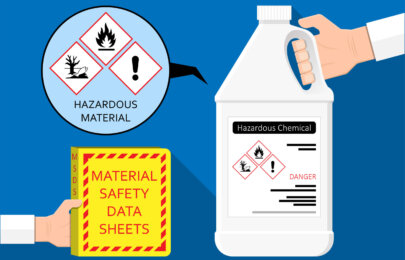
Chemicals drive modern industry. They are in factories, workshops, and laboratories. But with their power comes risk. Understanding these risks is not just good practice. It is a legal requirement. This is where the Globally Harmonized System (GHS) comes in. It is a system that standardizes how we classify and communicate chemical hazards. For any business that handles chemicals, GHS compliance is not optional. It is essential for worker safety and for avoiding legal trouble.
This guide will walk you through the basics of GHS. We will explain what it is, why it matters, and what you need to do to comply. We will cover the key elements of a GHS-compliant label. We will also discuss Safety Data Sheets (SDSs). By the end of this guide, you will have a clear understanding of your responsibilities. You will also know how to protect your team and your business.
What is the Globally Harmonized System (GHS)?
The Globally Harmonized System of Classification and Labelling of Chemicals (GHS) is an international system. The United Nations created it. The goal was to create a single, global standard for chemical hazard communication. Before GHS, different countries had different rules. This created confusion and risk. A chemical could be considered hazardous in one country but not in another. This made international trade difficult. It also put workers at risk.
The GHS is not a law itself. It is a framework of recommendations. Each country or region must adopt the GHS into its own regulations. In the United States, the Occupational Safety and Health Administration (OSHA) has aligned its Hazard Communication Standard (HCS) with the GHS. This means that most U.S. employers must follow these rules.
The GHS provides a logical and comprehensive approach to chemical hazard communication. It establishes consistent criteria for classifying chemicals according to their health, physical, and environmental hazards. It also specifies what information should be included on labels and Safety Data Sheets. This ensures that workers and emergency responders have the information they need to handle chemicals safely.
Why is GHS Compliance So Important?
GHS compliance is not just about following rules. It is about protecting people. When chemical hazards are clearly communicated, workers can take the necessary precautions. This reduces the risk of accidents, injuries, and long-term health problems. A safe workplace is a productive workplace. When workers feel safe, they are more focused and efficient.
Beyond the ethical imperative to protect workers, there are strong business reasons for GHS compliance. Non-compliance can lead to serious consequences. OSHA can issue hefty fines for violations. These fines can range from thousands to hundreds of thousands of dollars. The legal and financial risks of non-compliance are significant.
Furthermore, GHS compliance can improve your business’s reputation. It shows that you are a responsible employer who cares about worker safety. This can help you attract and retain top talent. It can also improve your relationships with customers and suppliers. In today’s global marketplace, many companies will only do business with other companies that are GHS compliant.
Finally, GHS compliance can streamline your operations. A standardized system for hazard communication makes it easier to train employees. It also simplifies inventory management and emergency response procedures. By adopting a single, harmonized system, you can reduce complexity and improve efficiency across your entire organization.
For more information on how we can help you with your chemical labeling needs, please visit our Chemical Labeling Services page.
The Six Key Elements of a GHS-Compliant Label
A GHS-compliant label is the cornerstone of effective hazard communication. It provides a quick, visual summary of a chemical’s hazards and the necessary precautions. There are six mandatory elements that must appear on a GHS label. Each element plays a critical role in ensuring that workers have the information they need to handle chemicals safely.
1. Product Identifier
The product identifier is the name or number used for a hazardous chemical. This could be the chemical name, code number, or batch number. The key requirement is that the product identifier on the label must match the identifier on the Safety Data Sheet (SDS). This allows workers to easily cross-reference the two documents for more detailed information. The identifier must be clear and prominently displayed on the label.
2. Signal Word
The signal word indicates the relative level of hazard severity. There are only two signal words used in the GHS system: “Danger” and “Warning”.
- Danger is used for the more severe hazards. It indicates that there is a high risk of serious injury or death.
- Warning is used for less severe hazards. It indicates that there is a lower risk of injury.
Only one signal word can be used on a label. If a chemical has multiple hazards, the signal word for the most severe hazard is used. For example, if a chemical is both a skin irritant (Warning) and a carcinogen (Danger), the signal word on the label must be “Danger”.
3. Hazard Pictograms
GHS hazard pictograms are graphical symbols that provide a quick, visual representation of a chemical’s hazards. Each pictogram consists of a symbol on a white background, framed within a red border. There are nine pictograms in the GHS system, but OSHA only enforces the use of eight. The environmental pictogram is not mandatory in the U.S. but may be used.
We will discuss the meaning of each pictogram in detail in the next section. The pictograms are one of the most important elements of the GHS label. They are designed to be instantly recognizable, even to workers who may not be able to read the text on the label.
4. Hazard Statements
Hazard statements are standardized phrases that describe the nature of a chemical’s hazards. Each hazard statement is assigned to a specific hazard class and category. For example, the hazard statement “Causes serious eye damage” is assigned to the hazard class “Serious eye damage/eye irritation” and the hazard category “Category 1”.
The hazard statements provide more detail than the pictograms. They give workers specific information about the potential health effects of a chemical. All applicable hazard statements must be included on the label.
5. Precautionary Statements
Precautionary statements are standardized phrases that describe recommended measures to minimize or prevent adverse effects resulting from exposure to a hazardous chemical. There are four types of precautionary statements:
- Prevention: These statements describe measures to be taken to prevent exposure to the chemical. For example, “Wear protective gloves.”
- Response: These statements describe what to do in case of accidental contact or exposure. For example, “If in eyes: Rinse cautiously with water for several minutes.”
- Storage: These statements describe how to store the chemical safely. For example, “Store in a well-ventilated place.”
- Disposal: These statements describe how to dispose of the chemical safely. For example, “Dispose of contents/container in accordance with local regulations.”
All applicable precautionary statements must be included on the label.
6. Supplier Information
The label must include the name, address, and telephone number of the chemical manufacturer, importer, or other responsible party. This information is essential in case of an emergency. It allows workers and emergency responders to contact the supplier for more information about the chemical.
By including these six elements, a GHS-compliant label provides a comprehensive summary of a chemical’s hazards and the necessary precautions. This information is critical for ensuring worker safety and for complying with OSHA regulations.
Understanding the GHS Hazard Pictograms
The GHS hazard pictograms are the most recognizable element of the GHS label. These simple, graphical symbols are designed to convey a lot of information in a small amount of space. They are a universal language that can be understood by workers around the world, regardless of their native language. There are nine pictograms in the GHS system, but only eight are enforced by OSHA in the United States. Let’s take a closer look at each one.
Health Hazard
This pictogram, which shows a person with a starburst on their chest, indicates that the chemical is a health hazard. This can include:
- Carcinogen: May cause cancer.
- Mutagenicity: May cause genetic defects.
- Reproductive Toxicity: May damage fertility or the unborn child.
- Respiratory Sensitizer: May cause allergy or asthma symptoms or breathing difficulties if inhaled.
- Target Organ Toxicity: May cause damage to organs through prolonged or repeated exposure.
- Aspiration Toxicity: May be fatal if swallowed and enters airways.
Flame
This pictogram, which shows a flame, indicates that the chemical is a fire hazard. This can include:
- Flammables: Flammable gases, liquids, and solids.
- Pyrophorics: Substances that can ignite spontaneously in air.
- Self-Heating: Substances that can heat up on their own and catch fire.
- Emits Flammable Gas: Substances that emit flammable gases when they come into contact with water.
- Self-Reactives: Substances that can undergo a strong exothermic decomposition even without the participation of oxygen (air).
- Organic Peroxides: Organic substances that contain the bivalent -O-O- structure and may be considered derivatives of hydrogen peroxide, where one or both of the hydrogen atoms have been replaced by organic radicals.
Exclamation Mark
This pictogram, which shows an exclamation mark, indicates that the chemical can cause less serious health effects. This can include:
- Irritant: Can cause skin and eye irritation.
- Skin Sensitizer: May cause an allergic skin reaction.
- Acute Toxicity (harmful): Harmful if swallowed, in contact with skin, or if inhaled.
- Narcotic Effects: May cause drowsiness or dizziness.
- Respiratory Tract Irritant: May cause respiratory irritation.
- Hazardous to the Ozone Layer (non-mandatory): This is not mandatory under OSHA regulations.
Gas Cylinder
This pictogram, which shows a gas cylinder, indicates that the chemical is a gas under pressure. This can include:
- Compressed Gases: Gases that are entirely gaseous at -50°C.
- Liquefied Gases: Gases that are partially liquid at temperatures above -50°C.
- Refrigerated Gases: Gases that are made partially liquid by refrigeration.
- Dissolved Gases: Gases that are dissolved in a liquid solvent.
Corrosion
This pictogram, which shows a chemical spilling on a hand and a piece of metal, indicates that the chemical can cause corrosion. This can include:
- Skin Corrosion/Burns: Causes severe skin burns and eye damage.
- Eye Damage: Causes serious eye damage.
- Corrosive to Metals: May be corrosive to metals.
Exploding Bomb
This pictogram, which shows an exploding bomb, indicates that the chemical is an explosion hazard. This can include:
- Explosives: Substances that can explode.
- Self-Reactives: Substances that can undergo a strong exothermic decomposition even without the participation of oxygen (air).
- Organic Peroxides: Organic substances that contain the bivalent -O-O- structure and may be considered derivatives of hydrogen peroxide, where one or both of the hydrogen atoms have been replaced by organic radicals.
Flame Over Circle
This pictogram, which shows a flame over a circle, indicates that the chemical is an oxidizer. Oxidizers can cause or contribute to the combustion of other materials, usually by yielding oxygen. This can include:
- Oxidizing Gases: Gases that can cause or contribute to the combustion of other material, generally by providing oxygen.
- Oxidizing Liquids: Liquids that can cause or contribute to the combustion of other material, generally by providing oxygen.
- Oxidizing Solids: Solids that can cause or contribute to the combustion of other material, generally by providing oxygen.
Skull and Crossbones
This pictogram, which shows a skull and crossbones, indicates that the chemical can cause acute toxicity (fatal or toxic). This means that the chemical can cause death or serious injury if it is swallowed, inhaled, or comes into contact with the skin.
Environment (Non-Mandatory)
This pictogram, which shows a dead tree and a dead fish, indicates that the chemical is hazardous to the aquatic environment. While this pictogram is part of the GHS system, it is not mandatory under OSHA regulations in the United States. However, it may be used to provide additional information.
By understanding these pictograms, workers can quickly identify the hazards of a chemical and take the necessary precautions. This is a critical part of a safe and compliant workplace.
Safety Data Sheets (SDS): The Foundation of GHS Compliance
While the GHS label provides a quick summary of a chemical’s hazards, the Safety Data Sheet (SDS) provides a more detailed and comprehensive source of information. The SDS is a 16-section document that provides information on the properties of each chemical; the physical, health, and environmental health hazards; protective measures; and safety precautions for handling, storing, and transporting the chemical. The SDS is the foundation of GHS compliance. It is the primary source of information for developing a safe and effective hazard communication program.
The 16 Sections of a Safety Data Sheet
An SDS must be in a uniform format and include the section numbers, headings, and associated information for the following 16 sections:
- Section 1: Identification: This section identifies the chemical on the SDS as well as the recommended uses. It also provides the essential contact information of the supplier.
- Section 2: Hazard(s) Identification: This section identifies the hazards of the chemical and the appropriate warning information associated with those hazards.
- Section 3: Composition/Information on Ingredients: This section identifies the ingredient(s) contained in the product, including impurities and stabilizing additives.
- Section 4: First-Aid Measures: This section describes the initial care that should be given by untrained responders to an individual who has been exposed to the chemical.
- Section 5: Fire-Fighting Measures: This section provides recommendations for fighting a fire caused by the chemical.
- Section 6: Accidental Release Measures: This section provides recommendations on the appropriate response to spills, leaks, or releases, including containment and cleanup practices to prevent or minimize exposure to people, properties, or the environment.
- Section 7: Handling and Storage: This section provides guidance on the safe handling practices and conditions for safe storage of chemicals.
- Section 8: Exposure Controls/Personal Protection: This section indicates the exposure limits, engineering controls, and personal protective measures that can be used to minimize worker exposure.
- Section 9: Physical and Chemical Properties: This section identifies physical and chemical properties associated with the substance or mixture.
- Section 10: Stability and Reactivity: This section describes the reactivity hazards of the chemical and the chemical stability information.
- Section 11: Toxicological Information: This section identifies toxicological and health effects information or indicates that such data are not available.
- Section 12: Ecological Information (non-mandatory): This section provides information to evaluate the environmental impact of the chemical(s) if it were released to the environment.
- Section 13: Disposal Considerations (non-mandatory): This section provides guidance on proper disposal practices, recycling or reclamation of the chemical(s) or its container, and safe handling practices.
- Section 14: Transport Information (non-mandatory): This section provides guidance on classification information for shipping and transporting of hazardous chemical(s) by road, air, rail, or sea.
- Section 15: Regulatory Information (non-mandatory): This section identifies the safety, health, and environmental regulations specific for the product that is not indicated anywhere else on the SDS.
- Section 16: Other Information: This section indicates when the SDS was prepared or when the last known revision was made.
Your Responsibilities for Safety Data Sheets
As an employer, you have several responsibilities when it comes to Safety Data Sheets. You must:
- Obtain an SDS for every hazardous chemical in your workplace. You should receive an SDS from the chemical manufacturer or distributor. If you do not receive one, you must request one.
- Make sure that the SDSs are readily accessible to your employees. This means that employees must be able to access the SDSs without leaving their work area. You can keep paper copies of the SDSs in a binder, or you can use an electronic system. If you use an electronic system, you must have a backup system in case of a power outage or other emergency.
- Train your employees on how to read and understand the SDSs. Your employees need to know where to find the SDSs and how to use them to get the information they need to work safely.
By meeting these responsibilities, you can ensure that your employees have the information they need to protect themselves from the hazards of the chemicals they work with.
How to Become GHS Compliant: A Simple Checklist
Becoming GHS compliant may seem like a daunting task, but it can be broken down into a few simple steps. By following this checklist, you can ensure that your workplace is safe and compliant with OSHA regulations.
- Create a list of all hazardous chemicals in your workplace. The first step is to identify all of the hazardous chemicals that are used or stored in your workplace. This includes everything from cleaning supplies to industrial solvents.
- Obtain a Safety Data Sheet (SDS) for each chemical. Once you have a list of all of the hazardous chemicals in your workplace, you need to obtain an SDS for each one. You should receive an SDS from the chemical manufacturer or distributor. If you do not receive one, you must request one.
- Ensure that all chemical containers are properly labeled. All chemical containers must be labeled with the six key elements of a GHS-compliant label: product identifier, signal word, hazard pictograms, hazard statements, precautionary statements, and supplier information.
- Make sure that your SDSs are readily accessible to your employees. Your employees must be able to access the SDSs without leaving their work area. You can keep paper copies of the SDSs in a binder, or you can use an electronic system. If you use an electronic system, you must have a backup system in case of a power outage or other emergency.
- Train your employees on the new GHS system. Your employees need to be trained on how to read and understand the new GHS labels and SDSs. They also need to be trained on the new hazards that are identified in the GHS system.
By following these five steps, you can ensure that your workplace is GHS compliant. This will not only help you avoid costly fines from OSHA, but it will also help you create a safer and more productive workplace for your employees.
Conclusion
GHS compliance is not just a matter of following the rules. It is a fundamental part of creating a safe and responsible workplace. By understanding the Globally Harmonized System, you can protect your employees, avoid costly fines, and improve your business’s reputation. The six key elements of a GHS-compliant label and the 16 sections of a Safety Data Sheet provide a comprehensive framework for communicating chemical hazards. By implementing a GHS-compliant hazard communication program, you can ensure that everyone in your organization has the information they need to work safely with chemicals.
At SSCPID, we understand the importance of GHS compliance. We offer a wide range of chemical labeling solutions to help you meet your regulatory requirements. From durable, chemical-resistant labels to on-demand printing solutions, we have the expertise to help you create a safe and compliant workplace. Contact us today to learn more about our Chemical Labeling Services.

Latest Posts

1D vs 2D Barcodes: Which Format Does Your Operation Actually Need?
February 26, 2026

